Why Creators Need Personal Websites: 2026 Guide
Why Creators Need Personal Websites: 2026 Guide
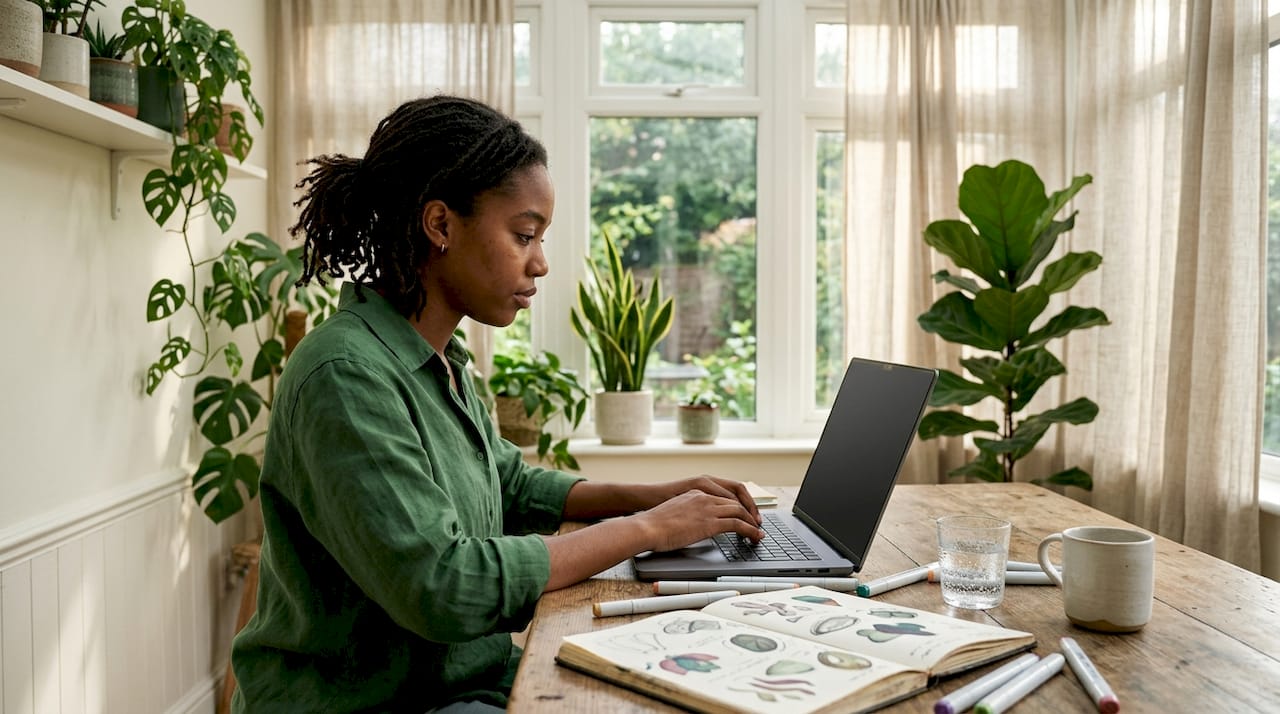
A personal website is the single most powerful tool a creator can use to own their online presence and professional brand. Social media profiles scatter your identity across platforms you do not control, forcing clients and collaborators to piece together who you are from fragmented posts. A dedicated personal site, often called a digital home base or personal portfolio site, solves that problem directly. This guide covers why creators need personal websites, what makes them work in 2026, and the practical steps to build one that earns attention from both people and AI search engines.
Why creators need personal websites for professional credibility
A personal website signals investment in your professional identity in a way that no social profile can replicate. Almost no one builds a proper personal website, so having one immediately separates you from the crowd. That gap is your advantage.
A custom domain communicates seriousness. yourname.com tells a client or recruiter that you treat your work as a real business. A LinkedIn profile or Instagram page tells them you have an account, just like everyone else.
Your site also gives you space to host the full range of your professional content:
- Portfolio pages that show finished work with context and results
- Case studies that explain your process, not just your output
- A blog or resource library that demonstrates ongoing expertise
- A speaking or events calendar that positions you as an authority in your field
- A contact page with a clear path to hire or collaborate
Brand strategists describe personal websites as “serendipity vehicles.” That phrase captures something real. A well-organized site lets people find you through searches you never anticipated, then trust what they find because the content is yours, on your terms.
Pro Tip: Choose a domain that matches your professional name exactly. Consistency between your domain, your email address, and your site’s visual identity builds the kind of trust that social handles simply cannot.
Design consistency matters as much as content. A site where the fonts, colors, and tone align with your work tells visitors that you pay attention to detail. The role of design in conversions is direct: a polished presentation increases the likelihood that a visitor becomes a client.
Why owning your content and data protects your career
Relying solely on social media for your professional presence is a strategic gamble with diminishing returns. Platforms change algorithms without notice, reduce organic reach, and prioritize advertiser goals over creator equity. The audience you build on someone else’s platform belongs to that platform, not to you.
Owning your content means owning your discoverability. Here is how that works in practice:
-
Publish first on your own site. The POSSE model (Publish On Your Own Site, Syndicate Elsewhere) establishes your domain as the original source. POSSE is a best practice for creators who want SEO authority without abandoning social reach. When you syndicate to Instagram or LinkedIn after publishing on your site, search engines credit your domain, not the platform.
-
Capture first-party data directly. A personal website lets you collect email addresses, run contact forms, and track visitor behavior through server-side analytics. Personal websites allow for server-side tracking and direct lead capture, giving creators granular audience insights that social analytics simply do not provide. Under privacy regulations like GDPR and CCPA, first-party data is also the most legally sound data you can collect.
-
Protect your audience from platform volatility. Social media platforms constantly change algorithms, reducing creators’ control over who sees their content. A website does not have that problem. Your content stays visible on your terms, not on a platform’s quarterly ad revenue strategy.
-
Build an email list as a direct channel. An email subscriber is an audience member you can reach without paying for reach. A newsletter signup embedded in your site converts casual visitors into a loyal, platform-independent audience.
The shift from social-only presence to owned digital infrastructure is not a technical upgrade. It is a business decision that protects the work you have already done.
How do AI and SEO make personal websites more valuable in 2026?
Treating a personal website as a static business card no longer works. Search engines and AI models like ChatGPT and Perplexity now surface content based on structured signals, authorship clarity, and publishing frequency. A site that sits untouched for two years earns nothing from those systems.
The technical elements that make a personal website discoverable in 2026 are specific. Structured data with schema.org markup, an llms.txt file, and clear authorship signals are the three critical components. Schema markup tells search engines what type of content is on your page. An llms.txt file tells AI crawlers how to index and attribute your work. Authorship signals, such as a consistent author bio and linked social profiles, confirm that a real, credible person created the content.
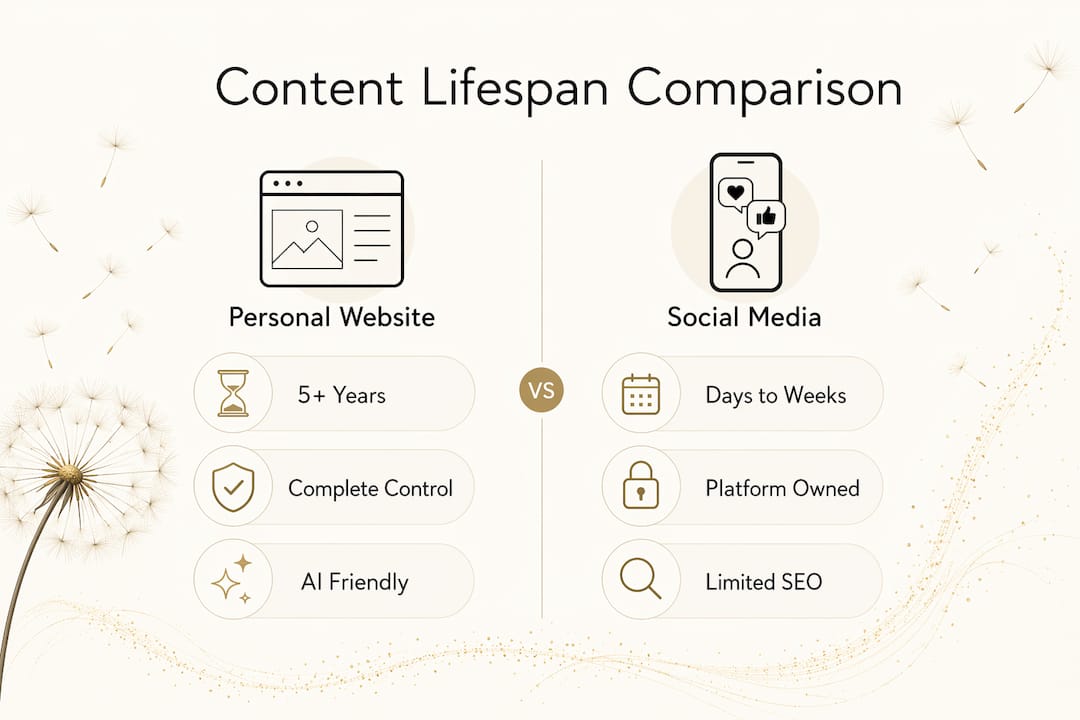
Content lifespan is the other major advantage. The table below shows how website content compares to social posts on the metrics that matter most for creators.
| Factor | Personal website content | Social media posts |
|---|---|---|
| Lifespan | 5+ years with proper SEO | Hours to days |
| Discoverability | Search engines and AI models | Platform algorithm only |
| Data ownership | Full, first-party | Platform-controlled |
| Audience control | Direct, via email and analytics | Indirect, platform-dependent |
| Content compounding | Traffic grows over time | Engagement drops after 48 hours |
Long-form articles on a personal domain compound in value. A well-written post published today can generate search traffic for years. A social post from last Tuesday is effectively invisible.
Pro Tip: Add an online visibility checklist review to your quarterly site maintenance. Confirm that your schema markup is current, your llms.txt file is present, and your most important pages are internally linked.
Practical steps to build a personal website that works
Building a personal website does not require technical expertise. It requires a clear plan and consistent follow-through. The steps below apply whether you are starting from scratch or rebuilding a site that has gone stale.
Choose your domain and platform
Register a domain that matches your professional name. Use a platform that gives you control over your content structure, metadata, and design. Prioritize platforms that support custom domains, clean URL structures, and easy content updates.
Build the core pages first
Your site needs five pages before anything else: a home page with a clear value statement, an about page with your professional story, a portfolio or work page, a blog or resources section, and a contact page. These five pages cover every reason a client or collaborator visits your site.
Set up your content system
A personal website works best as an active publishing system. Plan a realistic publishing schedule, whether that is one article per month or one per week. Consistency matters more than frequency. Each published piece adds a permanent, searchable asset to your site.
Useful tools and resources for creators building and maintaining a personal website include:
- Google Search Console for monitoring search performance and indexing status
- Schema markup generators (schema.org provides free documentation and tools)
- An email marketing platform like Mailchimp or ConvertKit for newsletter integration
- A privacy-compliant analytics tool such as Plausible or Fathom for first-party data
- A style guide document to keep your brand voice and visual identity consistent across all pages
Maintain and update regularly
A site that earns AI citations and search traffic is one that gets updated. Refresh your portfolio with recent work, update your about page when your focus shifts, and add new blog content that addresses questions your ideal clients are actually asking. The website automation tools available in 2026 make scheduling and publishing far less time-consuming than it used to be.
Personal branding for creators is not a one-time project. It is an ongoing practice that compounds in value the longer you sustain it.
Key Takeaways
A personal website is the most durable and controllable asset a creator can build, because it combines owned data, compounding SEO value, and AI discoverability in one place that no platform can take away.
| Point | Details |
|---|---|
| Credibility through ownership | A custom domain and professional content signal seriousness that social profiles cannot match. |
| Content compounds over time | Well-optimized website articles generate traffic for years; social posts fade within days. |
| First-party data is a competitive edge | Server-side tracking on your own site gives audience insights that social analytics withhold. |
| POSSE protects your SEO authority | Publishing on your site first, then syndicating, keeps search credit on your domain. |
| AI visibility requires active maintenance | Schema markup, an llms.txt file, and regular publishing keep your site discoverable by AI models. |
What I have learned watching creators skip this step
Most creators I work with know they need a personal website. They just keep putting it off because social media feels easier and more immediate. That instinct is understandable. It is also the reason so many talented people stay invisible to the clients who would pay them well.
The creators who build real traction are the ones who stop treating their website as a task and start treating it as an asset. A social post is a moment. A well-written case study on your own domain is a permanent record of your expertise that search engines and AI models can surface for years. Those are not equivalent.
The other pattern I see consistently: creators who launch a site and then leave it alone for 18 months wonder why it is not working. A static site is not a publishing system. It is a digital brochure. The sites that generate leads, speaking invitations, and inbound client inquiries are the ones with fresh content, clear contact paths, and structured data that tells AI crawlers exactly who the creator is and what they do.
The good news is that none of this requires a large budget or a technical background. It requires a decision to treat your online presence as something worth maintaining. That decision is the actual differentiator, not the platform you choose or the design you pick.
— Christopher
How Moderatemurmurations helps creators launch fast
Moderatemurmurations builds fast, clean websites for creators and freelance professionals who are ready to stop relying on social media alone. We handle the structure, copy, SEO foundations, and AI-ready technical setup so you can focus on your work, not your website.
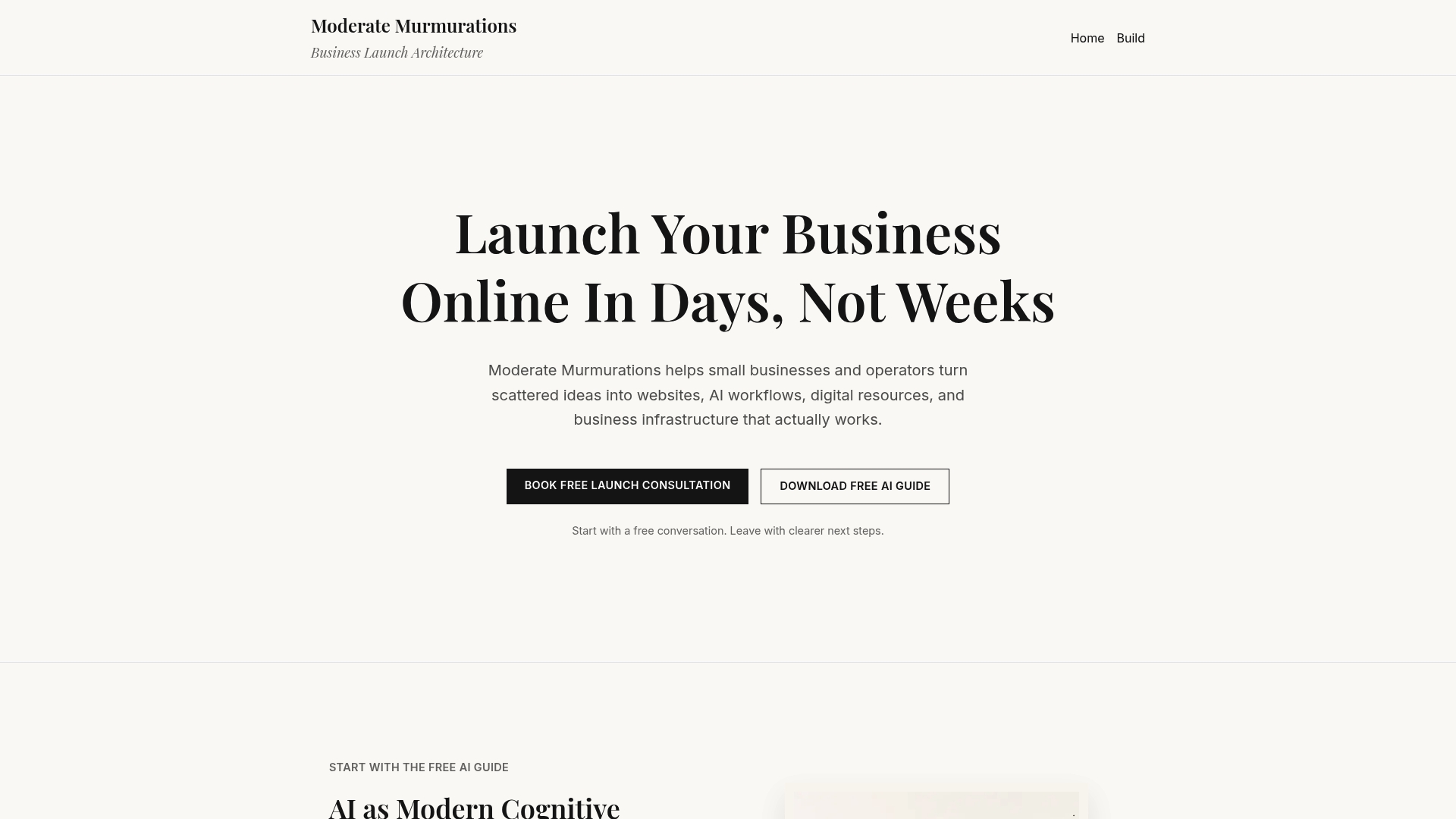
Every site we build includes clear messaging, a search-friendly structure, and the technical elements that make your content visible to both search engines and AI models. Whether you need a full personal brand website or a focused landing page, we move quickly without cutting corners. Creators who work with us go from idea to live site in days, not months. If you are ready to build a digital home base that actually works, start here.
FAQ
Do creators really need a personal website if they have social media?
Yes. Social media platforms prioritize advertiser goals, not creator equity. A personal website gives you full control over your content, your data, and how clients find you.
How does a personal website help with AI search visibility?
AI models like ChatGPT and Perplexity cite structured web content. A site with schema markup, an llms.txt file, and clear authorship signals is far more likely to appear in AI-generated answers than a social profile.
What is the POSSE publishing model?
POSSE stands for Publish On Your Own Site, Syndicate Elsewhere. It means publishing content on your personal domain first, then sharing it to social platforms. This keeps SEO authority on your site, not on the platform.
How often should creators update their personal website?
Consistency matters more than frequency. Publishing one well-written article or portfolio update per month is enough to signal to search engines and AI crawlers that your site is active and authoritative.
What pages does a creator’s personal website need first?
Start with five pages: home, about, portfolio or work samples, a blog or resources section, and a contact page. These cover every reason a potential client or collaborator visits your site.