Why Entrepreneurs Need Personal Websites in 2026
Why Entrepreneurs Need Personal Websites in 2026

A personal website is the only digital asset an entrepreneur fully owns, controls, and builds equity in over time. Social platforms change their algorithms, restrict reach, and occasionally shut down entirely. Your personal website does none of those things. As AI-driven discovery reshapes how clients, investors, and partners find and vet founders, the case for personal websites has never been more concrete. This article explains why entrepreneurs need personal websites, what those sites must do in 2026, and how to build one that actually works.
Why entrepreneurs need personal websites more than ever
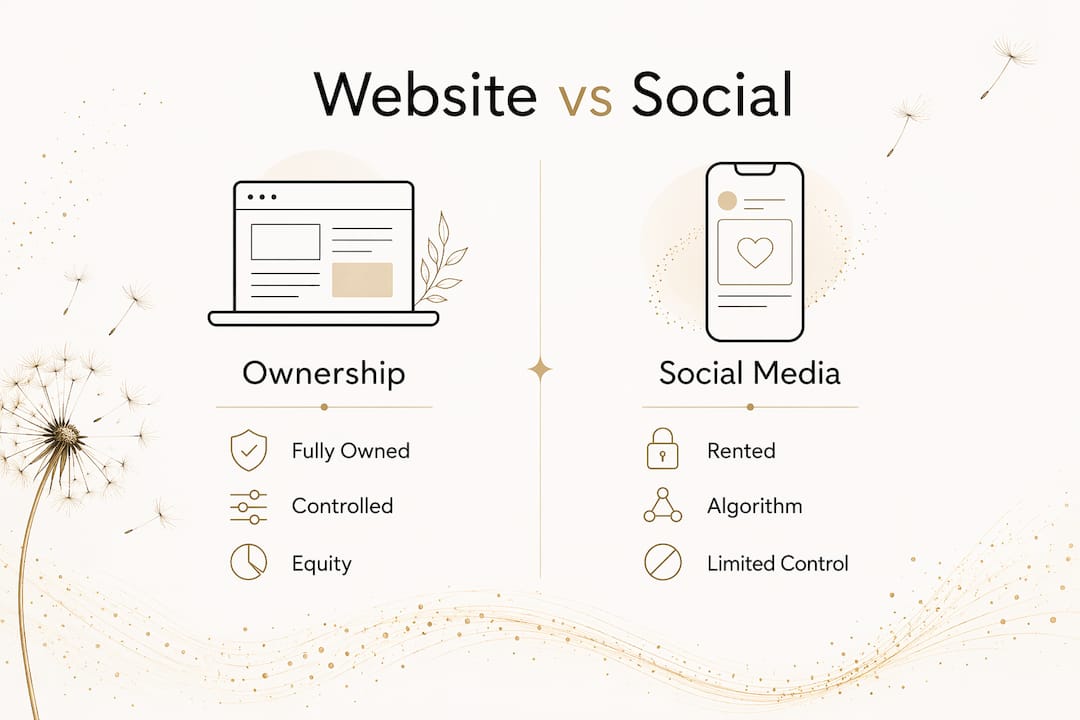
A personal website is a self-hosted, independently owned platform where an entrepreneur controls every word, link, and data structure. The industry term for this is owned media, and it sits at the foundation of any serious personal branding strategy. Unlike LinkedIn profiles or Instagram accounts, owned media cannot be taken away by a policy change or a platform pivot.
Social posts lose visibility within 48 hours, while website content ranks in search results for five or more years. That gap is not a minor inconvenience. It means every post you publish on a rented platform is essentially disposable, while every page on your personal site compounds in authority over time.

AI-generated content has surged 300% since 2023. That volume makes it harder for buyers, investors, and partners to identify credible sources. A well-structured personal website acts as a trust filter, signaling that a real person with a real track record stands behind the content.
The 2024 Edelman Trust Barometer confirms that buyers now research founders before they research companies. That shift means your personal site is often the first professional impression you make, not your company’s homepage.
Pro Tip: Register your full name as a domain (firstname lastname.com) even if you are not ready to build yet. Domain availability shrinks fast, and owning your name is the first step in protecting your online identity.
Personal website vs. social media and platform profiles
| Factor | Personal Website | Social Media Profile |
|---|---|---|
| Ownership | Fully owned by you | Owned by the platform |
| Content lifespan | 5+ years of ranking potential | Visibility fades within 48 hours |
| Algorithm dependency | None | High |
| AI citation eligibility | Yes, with structured data | Rarely indexed by LLMs |
| Customization | Complete control | Limited by platform design |
How personal websites function as active publishing systems
Most entrepreneurs make one critical mistake: they build a static page with a bio, a photo, and a contact form, then leave it untouched for two years. Static digital business cards no longer earn attention or rankings without ongoing content and technical optimization. A personal website in 2026 needs to function as an active publishing system.
Here is what that looks like in practice:
- Active blog or content section. Publish articles, case studies, or opinion pieces on a consistent schedule. Search engines and AI models both reward fresh, structured content. A blog also gives you something to share across social channels that drives traffic back to your owned platform.
- Media and achievement aggregation. Collect every podcast appearance, press mention, speaking engagement, and award in one place. Investors and partners should not have to search three platforms to verify your credibility.
- Newsletter or email capture. An email list is the second most valuable owned asset after your website. Connecting the two turns your site into a direct communication channel that no algorithm can interrupt.
- Speaking calendar or availability section. If you want to be booked for panels, podcasts, or conferences, make it easy. A dedicated page with your topics, past appearances, and a booking link removes friction from the process.
- Structured data and LLM-friendly formatting. Entrepreneurs must implement schema markup and llms.txt so that AI models can index, recognize, and cite their authority. This is not optional in 2026. It is the difference between appearing in AI-generated answers and being invisible to them.
Pro Tip: Add an llms.txt file to your site’s root directory. This file tells large language models like ChatGPT and Perplexity which pages represent your authoritative content, increasing the chance they cite you correctly.
Personal branding is about clarity, trust, and long-term relevance, not vanity. A personal website is the controlled space where that clarity lives. Every page you publish either reinforces or undermines the story you want the market to believe about you.
How personal websites affect networking, deals, and investor relations
A personal website shortens the sales cycle by reducing uncertainty. When a potential partner or investor searches your name and finds a clean, well-organized site with verified credentials, media appearances, and a clear point of view, they spend less time vetting and more time deciding. That speed matters in competitive markets.
Hiring managers and investors evaluate founders alongside startups, and a personal website acts as a vetting tool that accelerates their decision-making. A founder with no personal web presence creates doubt. A founder with a well-maintained site signals stability and professionalism before the first conversation.
Personal websites also serve as a single source of truth. Consider what happens when someone hears your name at a conference and searches for you on the way home. If your LinkedIn profile is the first result, you are at the mercy of LinkedIn’s formatting and character limits. If your personal site ranks first, you control the entire experience, from the headline to the call to action.
“Using personal websites as vetting tools reduces risk and accelerates partner and investor decisions, shortening business cycles.” — dockpage.com
For entrepreneurs building coaching or consulting businesses online, a personal website is especially critical. Clients in those categories buy the person first and the service second. Your site is where that buying decision begins.
- A personal website verifies your identity and credentials without requiring a referral.
- It gives journalists and podcast hosts a press-ready page to pull quotes and bios from.
- It creates a permanent record of your work that survives platform shutdowns and account suspensions.
- It lets you control the narrative when your name appears in search results alongside news or reviews.
What every entrepreneur’s personal website needs in 2026
Building a personal website is not complicated, but building one that actually performs requires deliberate choices. The following elements are non-negotiable for entrepreneurs who want credibility and AI visibility.
Clear, authentic About page
Your About page is the most visited page on most personal sites. Write it in first person. Tell the story of why you do what you do, not just what your resume says. Buyers and investors connect with motivation, not job titles. Include a professional photo, your current focus, and one or two sentences about what you are building next.
Consistent content publishing
Consistent personal brand identity helps people instantly understand and recommend entrepreneurs. Publishing regularly, even once or twice a month, keeps your site active in search indexes and gives AI models fresh content to reference. Tools like Grammarly and Hemingway Editor help maintain writing quality without slowing you down.
Structured data implementation
Schema markup tells search engines exactly what your content is: a person, an article, an event, or a product. Without it, your site is just text. With it, your content becomes eligible for rich results in Google Search and citations in AI-generated answers. This is one of the highest-leverage technical changes you can make to a personal site.
Direct contact and clear calls to action
Every page should have a clear next step. That might be booking a call, downloading a resource, or subscribing to your newsletter. Visitors who cannot figure out what to do next leave. A simple contact form and a visible email address remove that barrier immediately.
Pro Tip: Use a content strategy built for small businesses to plan your publishing calendar before you launch. Launching with five to ten strong articles gives your site immediate credibility and search traction.
What to avoid
Static sites with no publishing history, no structured data, and no clear calls to action consistently underperform. Personal websites are the only truly owned layer in digital presence, but ownership alone does not create results. The site has to work.
Key Takeaways
A personal website is the single most important owned asset an entrepreneur can build, combining long-term search visibility, AI citation eligibility, and trust-building in one controlled platform.
| Point | Details |
|---|---|
| Owned media is irreplaceable | Social platforms are rented; only your website gives you permanent, algorithm-free control. |
| Content longevity matters | Website content ranks for 5+ years; social posts lose visibility within 48 hours. |
| AI visibility requires structure | Schema markup and llms.txt make your site eligible for AI-generated citations and answers. |
| Websites shorten sales cycles | Investors and partners make faster decisions when a credible personal site reduces uncertainty. |
| Active publishing beats static pages | Regular content, media aggregation, and clear calls to action turn a site into a trust-building system. |
The part most entrepreneurs get wrong
I have worked with a lot of founders who treat their personal website like a checkbox. They build it once, feel good about it, and never touch it again. Then they wonder why no one finds them when they search. The site exists, but it does not work.
The shift I keep seeing is this: the entrepreneurs who get consistent inbound from Google and AI tools are the ones publishing regularly and treating their site as a living document. They update their About page when their focus changes. They add new media appearances within a week of going live. They write short posts about what they are learning. None of that is complicated. All of it compounds.
The other misconception I run into is that LinkedIn is enough. It is not. LinkedIn is a powerful distribution channel, but it is not your platform. The algorithm decides who sees your content. The platform owns your audience data. If LinkedIn changes its rules tomorrow, your reach changes with it. Your personal site does not work that way.
Personal branding built on clarity and trust requires a stable foundation. That foundation is your website. Everything else, LinkedIn, Instagram, podcasts, press mentions, should point back to it. When it does, you build an asset that grows in value every year you are in business.
— Christopher
How Moderatemurmurations helps entrepreneurs launch fast
Moderatemurmurations builds fast, clean personal websites for entrepreneurs who need a credible online presence without spending months on design and copy.
Every site we build includes clear messaging, search-friendly structure, and the technical foundations that support AI visibility, including schema markup and proper page architecture. We work with founders, coaches, consultants, and service providers who want to launch their business online quickly and get it right the first time. If you are ready to build a personal website that actually performs, visit moderatemurmurations.com/build to see how we work and what we build.
FAQ
Why do entrepreneurs need personal websites instead of just LinkedIn?
LinkedIn is a rented platform subject to algorithm changes and policy updates. A personal website is fully owned, ranks in search for years, and gives entrepreneurs complete control over their professional narrative.
How does a personal website help with AI discovery?
AI models like ChatGPT and Perplexity cite structured web content. A personal website with schema markup and an llms.txt file is far more likely to appear in AI-generated answers than a social media profile.
What is the most important page on an entrepreneur’s personal website?
The About page receives the most traffic on most personal sites. A clear, first-person story that explains your motivation and current focus builds trust faster than a resume-style bio.
How often should entrepreneurs publish content on their personal website?
Publishing once or twice a month is enough to keep your site active in search indexes and give AI models fresh content to reference. Consistency matters more than frequency.
Can a personal website actually shorten the sales cycle?
Yes. Investors and partners make faster decisions when a credible personal site answers their vetting questions upfront, reducing uncertainty and removing the need for multiple reference checks.